These are some things that often, but not always, are “Real” or “True” from the perspective of “Relative Truth” but they lack “Reality” from the perspective of “Absolute Truth”. The definitions of these two particular terms, “Absolute Truth” and “Relative Truth”, are being borrowed here, by me, from the Buddhist concept of The Two Truths. Those definitions are being invariably, involuntarily, transmuted by me just by the simple fact that I’m now the one using them.
Relative Truths are typically very useful. They can serve some sort of civil or educational purpose. On a general level I would say that Relative Truths provide more graspable introductions to the more nebulous difficult, paradoxical, and universally-interbeing nature of Absolute Truths.
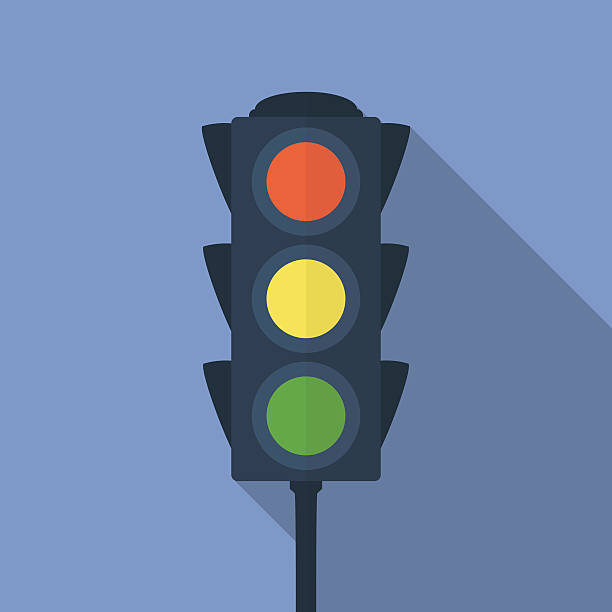
One possibly useful example we could use to better convey our meaning is the example of a Traffic Light. In the sense of the Absolute Truth, the traffic light carries out only 2 actions: it consumes electricity and emits light. The traffic light has no control, whatsoever, of your car’s braking systems. From the Relative Perspective however, the traffic light provides an incredibly valuable service to both you and the other drivers around you. All drivers, hopefully, agree on what the traffic light’s emissions mean and, again hopefully, they make every effort to heed those meanings. If the light turns red, you have to stop. There is a multitude of psychological and sociological systems at play here but, when boiled down all the way, the signs and traffic lights control a significant portion of what your car does.
We all stop at Red Lights, hopefully, and I would never suggest to anyone that they should alter that reactionary behavior toward the Traffic Light. I bring it up only to illustrate the incredible usefulness and necessity of any concept, regardless of how Relatively, or Absolutely, “True” it is. Life is full of things like Traffic Lights; undeniably wonderful creations that are still, essentially, symbolic in nature.
Everything I’ve said so far is just a poorly-veiled attempt, by me, to preemptively curtail any offense you may take during the rest of what I say here. Essentially, I don’t trust in your ability to control your own subconscious urges to become upset, defensive, self-righteous, insulted, or other wise perturbed. I make here Zero statements regarding any particular thing’s value, ethics, beauty, &c. If you feel perturbed, you will have to decide if you trust me when I say; the source of that perturbation resides within yourself only. Your own uncertainties and fear are not necessary. I love you. I love the things you’re in to. The “Reality” of those things we are into is relatively meaningless.
Now, let’s get to the list. To reiterate quickly: these are things that hold either Zero Absolute Truth, a very small amount of Absolute Truth, or some amount that is especially less than the Sociologically standard “beliefs”.
#1: Math
 The Mind of Joshypoo
I wonder if it is an absolute truth that, when you write a preamble about why people shouldn’t argue with a statement you will absolutely get an argument.
LikeLiked by 1 person
I’d invite you to possibly wonder what the actual goal is, of this post’s content, the way it’s titled, and the way it ends. (Unfinished?) is how I want to present the piece of writing. In the sense of Absolute Truth, this post is a completed effort, and, to be honest, among all my posts this is near the top in terms of how satisfied I am with final product.
This post contains lies, or at least knowingly, slightly-inaccurate, revisions of the truth for the sake of achieving other, complimentary ends. The elimination of lies is not the path to truth. This is because the idea that lies can be eliminated is, itself, a much more harmful type of lie.
LikeLike