How much of a “book” is this? The “Book Club” title seems to be getting vague. Isaac Asimov and Carl Sagan both have referred to Somnium as one of the earliest works of science fiction and I guess it just depends on your definition of “Science Fiction”. However, saying that Somnium is not so much a book is not to say that it’s uninteresting. This post is very weird but so is the book. I’m kind of combining a plot summary with a commentary on its purpose and reflection on what it says about the mind of its author.
I guess the true purpose of this post is that I can use it as an excuse to get a post out since I’m trying to write more. I mean, I read an entire book. It would be a shame to not get a blog post out of it. Yes, the “book” is only 71 pages long but shut up. I read a whole book and I deserve cheap content even if it is confusing.
Ok, I need to give some context now about Somnium because most people probably don’t know anything about the book. Somnium was written by a man who’s name might be familiar to you, Johannes Kepler. Kepler is one of those old timey space watching types like Galileo and Newton. While he might be slightly less famous than them he’s similar to them in contributions to science. That distinction alone makes anything he wrote worth reading. However, I, like most people, am not cool enough to read scientific papers from the early 1600’s about the laws of planetary motions in my free time. But, if that’s true what’s different about Somnium and why did I read it?
I’m kind of on a weird kick of reading books that don’t fit into any genre. The Mint, by T.E. Lawrence is one of those types. So, when I hear of a “book” by Kepler that Asimov and Sagan call the first piece of Science fiction my attention is grabbed. Additionally, when I hear that Somnium was used as evidence when Kepler’s mother was put on trial for witchcraft, what else am I gonna be but intrigued. I mean, you’re probably a little intrigued right now so the next question is obviously, what is Somnium.
From what I can tell, Kepler was sleeping one day and had a dream about a boy who, through a meeting with a spirit, learns about the moon, the people living on it, and more specifically how the motions of the heavens look from the moon’s perspective. This dream was one of those types that you wake up from and you immediately want to write it down so that’s what Kepler does. According to wikipedia, Somnium was written for this purpose or for that purpose or whatever but after I read it I don’t really see any purpose other than to record his dream. I think the story itself supports my interpretation of Somnium as a direct retelling of a dream. It feels very much like a dream in the way it moves from one topic to the next, from one premise to the next.
Kepler, in his real life, was raised by his mother and studied under a man named Brahe, another famous space guy. In Somnium there is a boy who is raised by his slightly witch-like mother and ends up going to study, in a foreign land, under a man named Brahe. So far it seems like a normal dream; he’s the main character but the ways Kepler psychologically feels disconnected from the other students is more prominent. Then, as usually happens in dreams, things get weirder. Him and his mother move back to their homeland, a more isolated nation, and when they get there his mother tells him she can convene with spirits or deamons or something. She summons one and this spirit starts to tell Kepler about life on the moon.
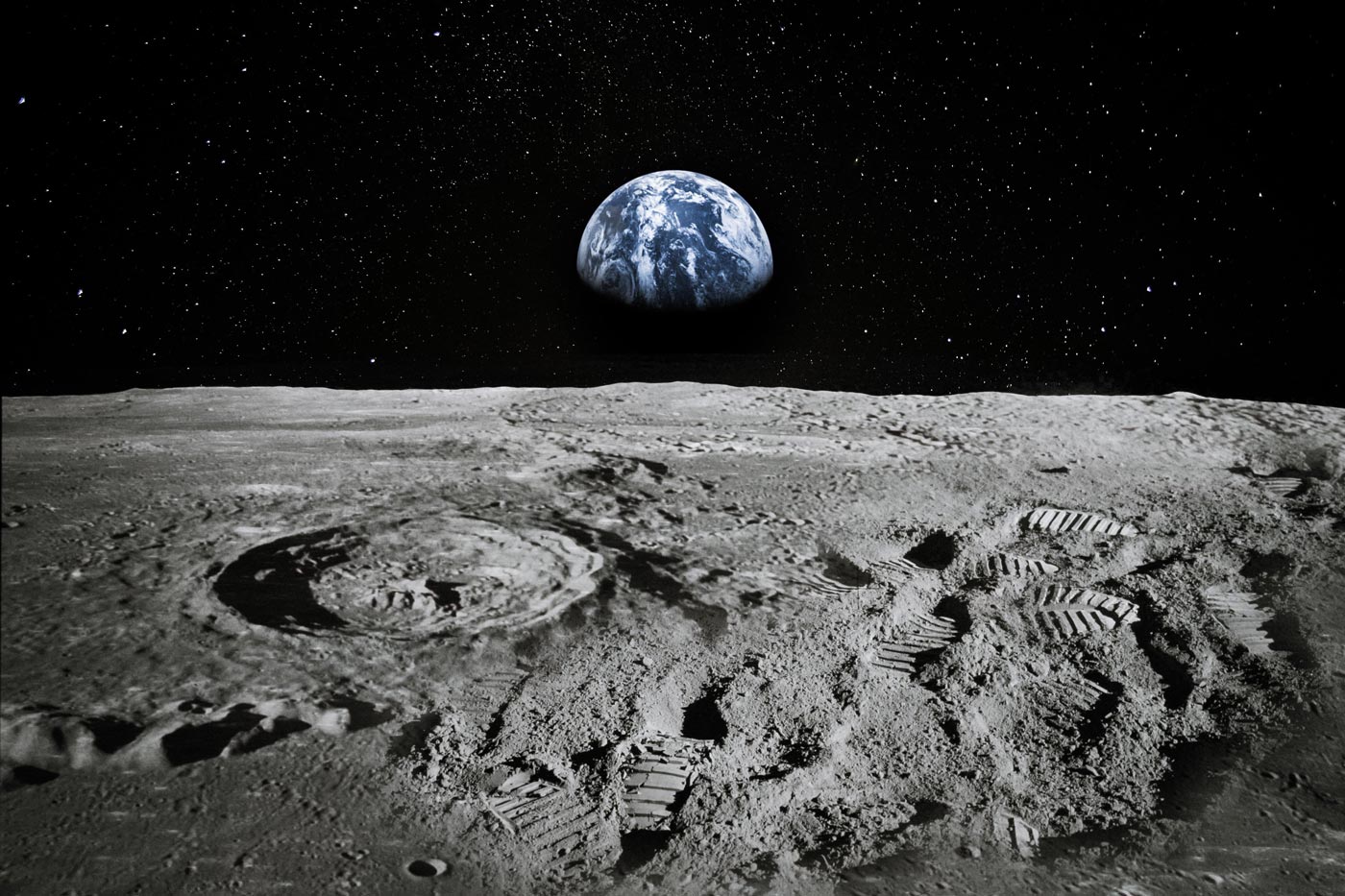
Now, we know Kepler spends his life in study of the heavenly bodies in space and that he’s a huge nerd so instead of this next section of his dream being about the women of the moon or the music of the moon people the spirit spends pages and pages describing the cycles of the stars in the Moon’s sky. He describes the way eclipses would look from the moon’s perspective and how the Earth’s entirely locked position in the Moon’s sky would effect the ways calendars and years are defined on the moon. He even talks about how to motions of other planets would look from the moon’s perspective.
This is the stuff that I think wikipedia uses to make the argument that Somnium is a conscious attempt to reimagine the planetary motions from the the moon’s perspective in order to provide a new model to facilitate understanding. While Somnium does accomplish that goal I think it’s important to remember that Kepler’s brain is probably doing that kind of thing all the time. It only makes sense for one of Kepler’s dream to be about how the planetary motions look form the moon because he’s essentially doing that 24/7. His mind is trying to understand the planets from a level entirely independent of his Earthly perspective so why would his dreams be constrained to that Earthly perspective?
Anyway, what happens next? The spirit starts talking about actual life on the moon. He talks about how the physiology of the plants and animals are different from Earth’s directly due to the impact of the Moon’s different relationships to the sun and the Earth. This, to me, is the most interesting part of the dream since the geography and astronomy go over my head. He talks about the differences in living on the side of the moon facing the Earth vs the other side and also living on the sort of prime meridian of the moon that separates those two halves. Ah yes, this stuff I like. I enjoy exploring the way all things are connected and how a change of something over here radically effects every part of life.
But, as it always seems to be with dreams, Kepler wakes up right at the most interesting part. Maybe though, his most interesting part was already over. Somnium then ends with Kepler saying that this is when he woke up from his dream, in bed, in Frankfurt. Now, it probably seems obvious to you that Somnium is simply Kepler writing down a particularly interesting dream he had but somehow that’s not really what I thought it was going to be when I started reading it. Based on what I’d read about Somnium I was expecting an actual story with a beginning, middle, and end. Having been wrong about what the book was is not any actual bother to me. I enjoy the unexpected as much as the next guy, but is this Science Fiction and does it fit into the category of “Book”?
I just now looked up the definition of “Book” and it’s probably something I should have done right at the freaking start. Am I a moron? Yes. Is Somnium fully a book? Well it’s words printed on pages that are glued together so yeah, it’s a book. Now I want to write a blog post on why I associated the word “Book” with… I don’t know, “Novel” maybe. Focus Josh! We answered the question of how much of a book it is and the implications of that answer are for another time. Pretend I never asked if it’s a book. I’m better at questions that are hard to answer because my real skill is bullshitting my way through things.
Is Somnium science fiction? In my opinion… Wait. Let me look up the actual definition of science fiction. God Damnit, I’ve found a rabbit hole to fall down. Are dreams fiction or non-fiction?

What do I do now? I guess I’ll write a separate post on that question, cause I have alot of points to bring up. For now I’ll say that, in my current opinion, Somnium is not Science Fiction or even fiction.
You know what, after reading Somnium I was kind of disappointed because it didn’t really have any impact on me. I guess I ended up getting what I wanted out of Somnium after all. I wanted to be lead to new questions and ideas I hadn’t asked or heard before and in all my years I’ve never really considered the level of reality dreams, their experiences, and even the retelling of them, occupy.
 The Mind of Joshypoo